I had that voice in my head the entire time.
Am I ready? Do I belong here?
I am saying this plainly, without apology, because I think the plain version is the useful one. I am a retired three-star general. I commanded the Combined Force Space Component Command. I ran the Space Force’s operations, cyber, and nuclear mission as its Deputy Chief. I helped build the operational architecture of America’s newest military branch.
And the voice was there for all of it. Every command. Every briefing where I was the most senior person in the room. Every morning.
This is not a confession. It is a report on the interior condition of a career — offered because I believe it is more useful than the version most senior leaders tell, which is the version where the doubt was overcome, the confidence was earned, and the success followed from the certainty.
That is not how it worked for me. The doubt did not go away. I kept going anyway. Those two things were true at the same time, for thirty-three years, and neither one cancelled the other. That is the thing worth knowing.
What the Market Gets Wrong About This
The leadership development market has named this condition imposter syndrome. That name is doing several things, some of them useful and some of them not.
The useful thing the name does is acknowledge that the experience is common — that senior leaders across every domain and demographic regularly carry doubt about their own readiness, and that carrying this doubt does not mean they are wrong to be where they are.
The less useful thing the name does is frame the condition as a problem to be solved. The therapeutic frame that accompanies it is usually some version of: the doubt is wrong, you have earned your place, the evidence supports your being here, you should believe the evidence. This framing is well-intentioned. It is also, in my experience, operationally incomplete.
The goal is not to silence the voice. The goal is to not let it do the deciding.
There is a significant difference between those two things. Silencing the voice is a psychological project. Not letting it do the deciding is an operational one. The psychological project is long, uncertain, and not guaranteed to succeed. The operational project is available right now: you ask the voice what it wants, you note that its concerns are not unfounded, and then you make the decision that the situation requires, regardless of whether the voice has been satisfied. You have been doing this. You just have not named it.
What the Voice Actually Is
I want to offer a reframe that may be more useful than the imposter syndrome framework for senior leaders in high-stakes environments.
The voice is not a liability. It is an instrument.
The leader who has stopped asking “am I the right person for this?” has stopped updating their answer. They have arrived at certainty — which means they have stopped looking for the evidence that would change their approach. In environments where the problem is evolving faster than any one person can track, a leader who has stopped asking whether they are the right person for it is a leader who has stopped listening to the room.
The voice that asks “am I ready?” is the same voice that asks “what am I missing?” and “who in this room knows something I do not?” and “what does this situation require that I have not yet found?” It is the instrument of self-awareness that makes the Liberation Doctrine function. You cannot genuinely ask “what does this room know that we have not yet deployed?” if you have decided that you already have the full picture. The voice is what keeps the question honest.
This is why self-awareness is not the opposite of the Liberation Move — it is the enabling instrument. The leader who has learned to carry the voice without letting it paralyze them is the one who can build the conditions for the room to perform at its ceiling, because they have not decided the ceiling is already where they think it is. They keep looking. The voice keeps prompting. The room keeps surprising them. That is the condition in which capability gets unlocked.
Three Things That Do Not Help — and What Does
I have been on the receiving end of a lot of well-intentioned advice about the voice. Most of it does not help. Here is what does not help, and what does:
Being told the voice is wrong does not help. The voice is frequently making accurate observations. I was not, in several of the rooms I entered, the most technically qualified person present. The voice was not wrong about that. What the voice was wrong about was the inference it drew from that fact — that because I was not the most technically qualified, I did not belong. Those are not the same thing. Telling me the voice was wrong would have been incorrect. Helping me distinguish between the accurate observation and the wrong inference would have been useful.
Being told to ignore it does not help. The voice is persistent because it is attached to genuine stakes. Ignoring it does not make it quieter — it makes it louder, because it interprets being ignored as evidence that the concern is too serious to face. The move is not to ignore the voice. It is to acknowledge what it is pointing at and then decide anyway.
Being told that successful people do not have it does not help. In my experience, the most effective leaders I have worked with are acutely aware of their own limitations. What they have that others do not is not the absence of the voice. It is the discipline to act regardless of whether the voice has been satisfied.
What actually helps is the behavioral evidence of having acted anyway. I applied to Weapons School multiple times before being selected. I walked into the Red Flag room knowing what the pilots in that room were testing. I delivered arguments in institutional settings where the argument was costly before I knew whether it would be heard. Not because the voice was quiet. Because the situation required the action and the voice was not a veto.
The pattern is not overcoming the voice. The pattern is not waiting for it to stop. The pattern is acting against it — not once, not heroically, but as a matter of practice, so that the gap between what the voice says and what you do becomes a gap you maintain rather than a gap you have to fight for every time.
Who This Article Is For
This article is not a vulnerability narrative. It is not here to give you permission to doubt. You do not need permission. The doubt is already present, and it is doing its job — keeping you honest, keeping you looking, keeping you from deciding that the ceiling is already where you think it is.
This article is for the leaders who are not applying for the position, not taking the assignment, not making the argument — because the voice is telling them to wait until they are ready. The voice will not stop. The readiness it is asking for is not a state you arrive at. It is a moving target that recedes as you approach it, because the situations that require the most from you are the ones that genuinely could not have been prepared for.
The voice is not the signal to wait. It is the signal that the stakes are real. That is a different instruction.
Keep going.
The One Instruction
I told a room of women at a leadership symposium in 2024: “You earned your place. You’ve done the work. Don’t let that voice tell you otherwise.”
I meant it then. I mean it here, in writing, to the same room — which is larger than that symposium and older than the leaders I was addressing, and has been asking the same question for longer than any of us have been asking it.
You earned your place. Not by silencing the voice. By keeping going while it talked.
The distinction matters. The voice is not going away. The going is entirely up to you.
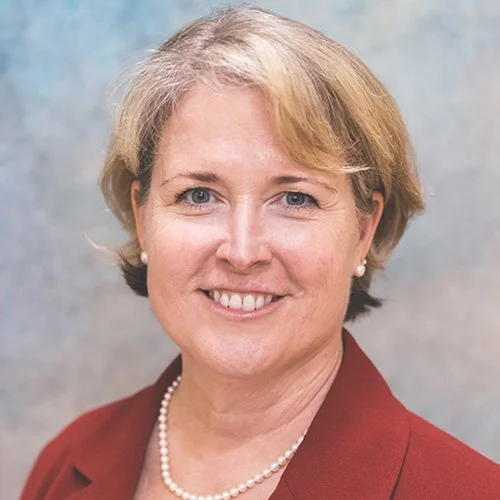
DeAnna Burt
DeAnna Burt is the strategic board member who finds where an organization’s capability is locked and builds the conditions for it to perform at its ceiling. She is the person you call when the room has everything it needs to solve the problem and nobody has figured out how to unlock it yet. At Red Flag, one of the most demanding large force employment exercises in the United States Air Force, she commanded a room of the finest aviators in the world without being able to fly. Her job was not to out-perform them. It was to build the conditions in which they could perform at their ceiling. She did. That is the move she has been running for thirty-three years. She built the operational space infrastructure America depends on, the satellite networks that run GPS and financial transaction timing, the multinational command architecture coordinating allied space operations across 25 nations. She commanded every level. She ran the Space Force’s cyber, nuclear, and operations mission as its Deputy Chief. She did all of this in a domain where the adversary studies your dependencies before you have mapped them, where being wrong is not a bad quarter but an irreversible outcome, and where the question is never “what do I know?” but “what does this team know that we have not yet deployed?” That question is the most valuable thing she brings. Not the record, though the record is there. The specific diagnostic capacity to walk into any organization, find where the capability is locked, and build the conditions for it to perform at its ceiling. In environments where being wrong is not recoverable, that capacity is the difference between the organization that adapts and the one that does not. She now works with boards, C-suites, and senior teams who need someone who has been accountable for that outcome and who can help them find and unlock the capability they already have.
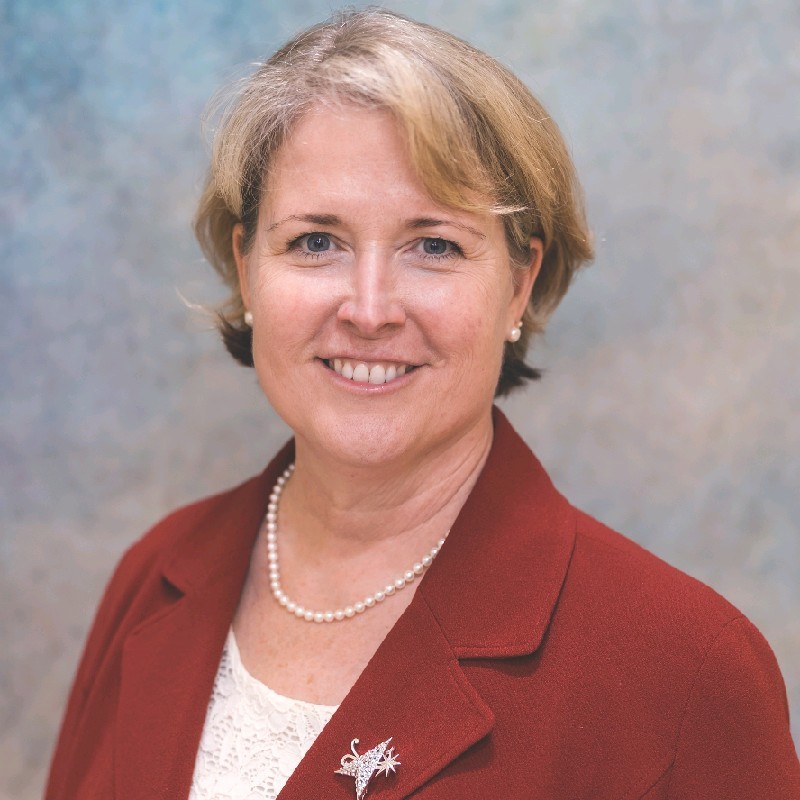
DeAnna Burt is the strategic board member who finds where an organization’s capability is locked and builds the conditions for it to perform at its ceiling. She is the person you call when the room has everything it needs to solve the problem and nobody has figured out how to unlock it yet. At Red Flag, one of the most demanding large force employment exercises in the United States Air Force, she commanded a room of the finest aviators in the world without being able to fly. Her job was not to out-perform them. It was to build the conditions in which they could perform at their ceiling. She did. That is the move she has been running for thirty-three years. She built the operational space infrastructure America depends on, the satellite networks that run GPS and financial transaction timing, the multinational command architecture coordinating allied space operations across 25 nations. She commanded every level. She ran the Space Force’s cyber, nuclear, and operations mission as its Deputy Chief. She did all of this in a domain where the adversary studies your dependencies before you have mapped them, where being wrong is not a bad quarter but an irreversible outcome, and where the question is never “what do I know?” but “what does this team know that we have not yet deployed?” That question is the most valuable thing she brings. Not the record, though the record is there. The specific diagnostic capacity to walk into any organization, find where the capability is locked, and build the conditions for it to perform at its ceiling. In environments where being wrong is not recoverable, that capacity is the difference between the organization that adapts and the one that does not. She now works with boards, C-suites, and senior teams who need someone who has been accountable for that outcome and who can help them find and unlock the capability they already have.