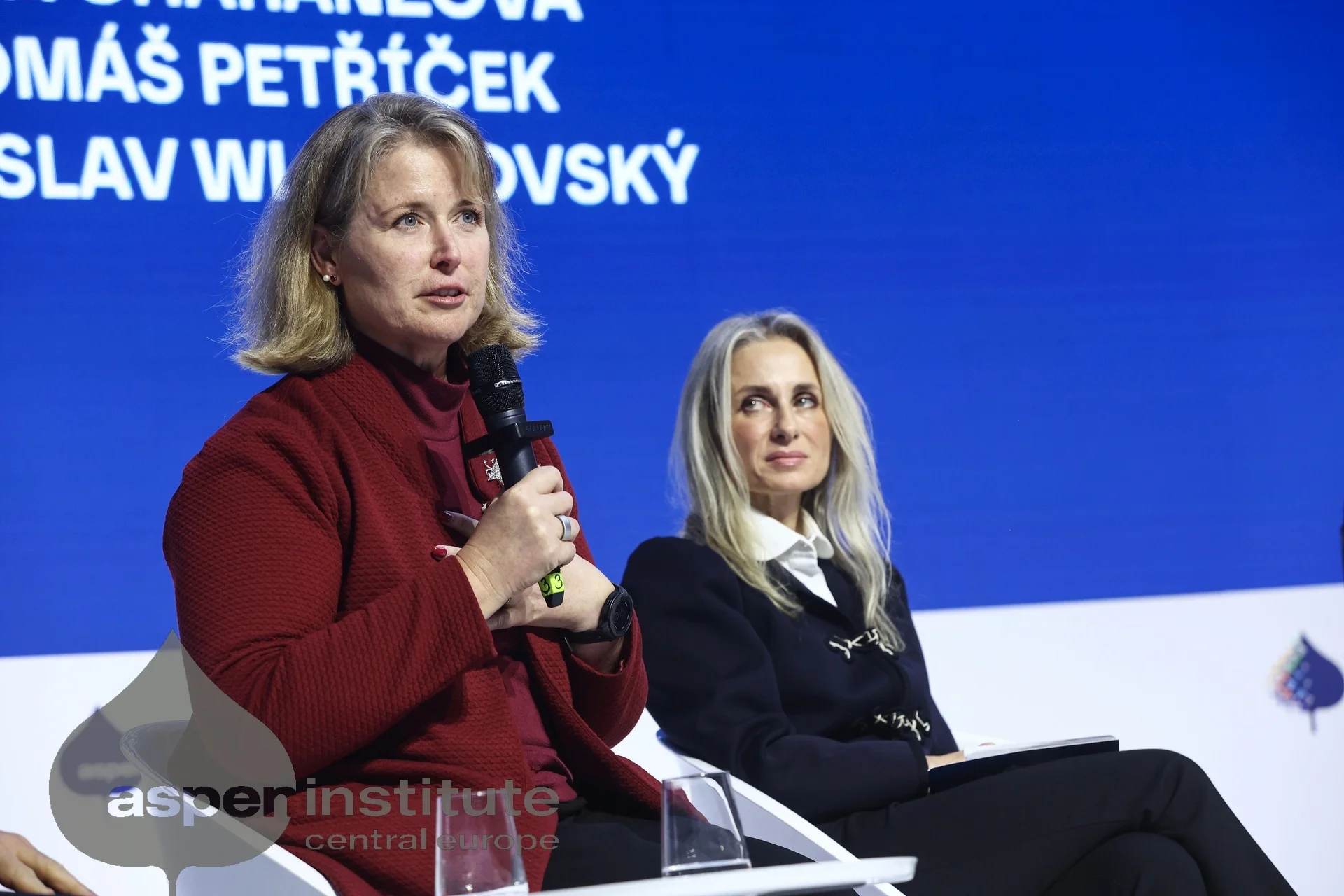
On October 1, 2025, I retired from the United States Space Force after thirty-three years of service. In that time, I held every level of command in the organization that runs the satellite infrastructure the United States military — and the American economy — depends on. I stood up the first change-of-command ceremony in the history of the Combined Force Space Component Command. I ran the Space Force’s operations, cyber, and nuclear mission as its Deputy Chief.
I did none of this by being the most capable person in any room I entered.
I did it by being the person who knew how to unlock what the most capable people in those rooms could do. That distinction — between having the answers and building the conditions for the answers to emerge — is the most important thing I learned in thirty-three years of leading organizations where being wrong was not a recoverable outcome.
I am writing this article to name that distinction as a doctrine. Not a philosophy. Not a style. A doctrine: a set of operating principles that can be learned, applied, and tested against results. I call it the Liberation Doctrine, because its core move is liberation — of the capability that is already present in every organization and not yet fully deployed.
The environments that demand this doctrine are multiplying. The problems that require it are no longer confined to warfighting branches and intelligence agencies. They belong to any organization navigating a world that moves faster than any one leader can track, where dependencies run deeper than most boards have mapped, and where the cost of concentrated capability — capability that lives only at the top and leaves when the top changes — is becoming visible in real time.
This is the doctrine. Five principles. Thirty-three years of proof.
Principle 1 — The Liberation Question
“What does this room know that we have not yet deployed?”
Ask this question before any other in any meeting at any level. Not “what do I know?” Not “what does the strategy say?” Not “what should I tell them?” What does the room already know that we are not yet using?
The answer to this question, in virtually every organization I have been in, is more than anyone has admitted. The person who has mapped the dependency you haven’t seen is in the room. The person who knows why the last initiative failed is in the room. The person who has already identified the solution to the problem the meeting was called to solve is in the room — and has not said so, because the culture of the organization has not made it safe, or valuable, or expected.
The Liberation Question does several things at once. It signals that the leader does not assume they have the full picture — which is the only honest position available to any leader in a genuinely complex environment. It creates space for the people who have been holding something back. And it reorients the energy of the meeting from the transmission of directives to the discovery of what is already known.
I have asked this question in briefings where the answer changed the mission plan. I have asked it in budget meetings where the answer surfaced a dependency no one had mapped. I have asked it in the quiet after a ceremony when the person who came to find me afterward told me what no one had been willing to say in the room. The question is simple. What it surfaces is not.
Principle 2 — The Accountability Architecture
“We” for achievement. “I” for accountability.
This is not a communications guideline. It is an operating doctrine that must be held consistently to be credible. The architecture is the signal that the Liberation Move is genuine and not performative.
When a leader claims credit with “I” and distributes blame with “we,” the architecture has inverted. Everyone in the room notices — even when no one says so. The inversion teaches the room that deploying what they know is risky: the leader will take the upside and distribute the downside. The locked capability stays locked.
When a leader consistently says “we built this” and “I was responsible for what went wrong,” the architecture holds. The room learns that it is safe to deploy what they know. The leader will not take credit for it. The leader will absorb the accountability if it does not work. That safety is the precondition for the Liberation Move to function.
I have never been the hero of my own stories. I have always been responsible for my own outcomes. In my experience, these two stances are not in tension — they are the same doctrine, applied to credit and accountability respectively.
Principle 3 — The Precision Standard
Words matter. The budget is the honest statement of conviction. Where language and resources diverge, the language is the lie.
In the domain I ran, an imprecise command and an imprecise satellite custody instruction had the same consequence. I brought that standard to every room I entered — including the ones where imprecision would have been invisible and cost-free. Not because I was trained to. Because I understood that language drift is the first symptom of organizational drift, and organizational drift in an environment where being wrong is not recoverable is a readiness problem.
The precision standard has two applications. The first is language: does every statement in this meeting mean the same thing to every person in the room? Does it name a responsible party? Does it state the consequence of being wrong? The second is resources: does the investment match the stated priority? Because if it does not, the stated priority is not the actual priority — the budget is. An organization that says space is critical and funds it as a nice-to-have has told you its actual belief. The words are aspirational. The budget is honest.
Naming the gap between what an organization says it believes and what it pays for is one of the most costly acts available to a senior leader. It is also one of the most necessary. The organizations that close that gap are the ones whose capability is actually deployed. The ones that do not have invented a language for talking about priorities that does not require them to fund them.
Principle 4 — The Conviction Test
What has this person held when it cost them something to hold it?
The leadership market selects for certainty — the leader who sounds sure, projects confidence, does not appear to doubt. The problem with selecting for certainty is that certainty is a performance available to anyone willing to perform it. Conviction is not. Conviction is a position held under pressure, at cost, before the outcome is safe. It requires something to have been held against something else. You cannot perform it. You can only have done it.
I turned down a pilot slot in 1989 because I was convicted that engineering and space were the right domain for me — not because I was certain they would prove to be. Two years later, combat roles opened. The domain I chose became the most contested infrastructure in modern warfare. I did not know that would happen. The conviction preceded the proof.
Before the next leadership promotion decision your organization makes, ask one question: what has this person held when it cost them something to hold it? Not what have they been right about — right is partly luck, partly timing, partly the quality of the people around them. What have they maintained under genuine pressure, at genuine cost, before the outcome was safe?
The answer to that question is the only reliable evidence of what they will hold when it costs the organization something. Everything else is credential. Conviction is the thing that holds when the credential runs out.
Principle 5 — The Irreversible Standard
In the environments that matter most, being wrong is not a recoverable outcome. Decide accordingly.
This principle is not about creating fear. It is about calibration. The meetings where the stakes are theoretical produce theoretical decisions — ones that look right in the room and dissolve under the pressure of implementation. The meetings where the stakes are named produce different decisions, made by different people in different ways.
In the domain I ran, the adversary does not study your intentions. They study your dependencies. They look for what you cannot operate without. Every organization has dependencies it has not fully mapped — on satellite infrastructure, on specific people, on supply chains that run through domains they do not fully understand. When those dependencies are named, the decisions about how to manage them change. Not because the people in the room are different, but because the standard they are deciding against is different.
I ask organizations to name the irreversible outcomes in their environment before they set their priorities. Not the bad quarters. The decisions that, once made, cannot be unmade. The capabilities that, once lost, cannot be rebuilt in time. The dependencies that, if disrupted, do not have alternate routes. When those are named, the Liberation Question takes on a different urgency: what does this room know that we have not yet deployed — before the moment when we will need it and cannot wait to unlock it?
The Doctrine in Three Rooms
The Liberation Doctrine is not domain-specific. It applies wherever capability is concentrated at the top and needs to be distributed throughout. Here is what it looks like in three organizational contexts:
In the boardroom: The Liberation Question applied to the board itself. What does this board know about the organization that the organization has not yet deployed? What are the board members holding back in formal sessions that they say in the parking lot afterward? What has the board collectively identified as a risk that the board as a body has not named to management? The Liberation Question in a boardroom frequently surfaces the thing the board has been too polite, too cautious, or too uncertain of its standing to say. That thing is almost always the most important thing.
In the talent review: The Conviction Test applied to every promotion decision. Replace “how confident is she?” with “what has she held at cost?” Replace “does she project leadership?” with “what has she maintained under pressure before the outcome was safe?” The talent that most organizations are currently passing over is disproportionately the talent that operates from conviction rather than performing certainty — because the selection systems are calibrated for the performance, not the substance.
In the strategy meeting: The Precision Standard applied to every priority. For each stated strategic priority, ask: does the budget match the argument? Is the investment proportionate to the stated importance? Is the responsible party named — not a function or an initiative, but a person? If the answers are no, the strategy is aspirational, not operational. The gap between the stated priority and the funded one is the most reliable indicator of what the organization actually believes.
What the Doctrine Is Not
It is not a management methodology to install. There is no certification program, no framework to license, no workshop to deliver. The operating principles are not complicated. Living them is the cost.
The Liberation Question surfaces capability that someone has been protecting. The Accountability Architecture removes the ambiguity that someone has been using as cover. The Precision Standard names the gaps that someone has been avoiding. The Conviction Test asks for evidence that most hiring processes do not collect. The Irreversible Standard names stakes that most leadership conversations prefer to keep theoretical.
Each principle requires the leader to name something that is easier to leave unnamed. The resistance to each principle is structural, not personal — it is built into every organization that has learned to manage by implication rather than by clarity. The doctrine does not install easily. It holds or it does not, depending entirely on whether the leader running it is willing to pay the cost of the clarity it requires.
I have been paying that cost for thirty-three years. The record is in the public domain. What is not in the record is what it cost — which is the part worth knowing.
The Question That Starts Here
The organizations that will navigate what is coming are not the ones with the best strategy. They are the ones whose leaders have built the conditions for what the organization already knows to be found, trusted, and deployed — before the environment demands it and there is no longer time to unlock it.
The doctrine starts with one question. It does not require a program. It requires a leader willing to ask it — and to stop talking when they do.
“What does this room know that we have not yet deployed?”
Ask it before the next meeting ends.
The answer is already there.
DeAnna Burt
DeAnna Burt is the strategic board member who finds where an organization’s capability is locked and builds the conditions for it to perform at its ceiling. She is the person you call when the room has everything it needs to solve the problem and nobody has figured out how to unlock it yet. At Red Flag, one of the most demanding large force employment exercises in the United States Air Force, she commanded a room of the finest aviators in the world without being able to fly. Her job was not to out-perform them. It was to build the conditions in which they could perform at their ceiling. She did. That is the move she has been running for thirty-three years. She built the operational space infrastructure America depends on, the satellite networks that run GPS and financial transaction timing, the multinational command architecture coordinating allied space operations across 25 nations. She commanded every level. She ran the Space Force’s cyber, nuclear, and operations mission as its Deputy Chief. She did all of this in a domain where the adversary studies your dependencies before you have mapped them, where being wrong is not a bad quarter but an irreversible outcome, and where the question is never “what do I know?” but “what does this team know that we have not yet deployed?” That question is the most valuable thing she brings. Not the record, though the record is there. The specific diagnostic capacity to walk into any organization, find where the capability is locked, and build the conditions for it to perform at its ceiling. In environments where being wrong is not recoverable, that capacity is the difference between the organization that adapts and the one that does not. She now works with boards, C-suites, and senior teams who need someone who has been accountable for that outcome and who can help them find and unlock the capability they already have.

DeAnna Burt is the strategic board member who finds where an organization’s capability is locked and builds the conditions for it to perform at its ceiling. She is the person you call when the room has everything it needs to solve the problem and nobody has figured out how to unlock it yet. At Red Flag, one of the most demanding large force employment exercises in the United States Air Force, she commanded a room of the finest aviators in the world without being able to fly. Her job was not to out-perform them. It was to build the conditions in which they could perform at their ceiling. She did. That is the move she has been running for thirty-three years. She built the operational space infrastructure America depends on, the satellite networks that run GPS and financial transaction timing, the multinational command architecture coordinating allied space operations across 25 nations. She commanded every level. She ran the Space Force’s cyber, nuclear, and operations mission as its Deputy Chief. She did all of this in a domain where the adversary studies your dependencies before you have mapped them, where being wrong is not a bad quarter but an irreversible outcome, and where the question is never “what do I know?” but “what does this team know that we have not yet deployed?” That question is the most valuable thing she brings. Not the record, though the record is there. The specific diagnostic capacity to walk into any organization, find where the capability is locked, and build the conditions for it to perform at its ceiling. In environments where being wrong is not recoverable, that capacity is the difference between the organization that adapts and the one that does not. She now works with boards, C-suites, and senior teams who need someone who has been accountable for that outcome and who can help them find and unlock the capability they already have.