In the spring of 1989, I was a sophomore in ROTC at Embry-Riddle Aeronautical University. My instructors offered me a pilot slot.
At the time, women in the military could fly aircraft — but not in combat. The pilot slot meant T-38s. It meant a prestigious, recognized, expected career path. Every instructor, every peer, every signal the culture was sending pointed in the same direction: take it.
I turned it down.
Not because I was certain that engineering and space would prove to be the right choice. I did not know that GPS would become the infrastructure underlying modern commerce. I did not know the space domain would become contested in ways it had never been before. I did not know the United States would stand up a new branch of the military to defend that domain. I knew none of that.
What I knew was where my conviction lived. Engineering and space were the right domain for me — not because the evidence was complete, but because the position was genuinely held. Two years after I turned down that slot, combat roles opened to women. The domain I had chosen became the most consequential operational environment of my generation. The conviction preceded the proof by two years.
That gap — between conviction and proof — is the subject of this article.
The Distinction the Market Has Missed
The leadership development market has spent decades rewarding certainty. The leader who sounds sure. Who projects confidence. Who communicates that they know what is going to happen. The problem with selecting for certainty is that certainty is a performance available to anyone willing to perform it. You cannot tell, from the performance of certainty, whether the person has genuine grounds for their confidence or has simply learned to perform it convincingly.
In environments where the stakes are real — where the decision has consequences that cannot be undone — the performance of certainty is one of the most dangerous things a leadership culture can reward.
Conviction is different. Conviction is a position held under pressure, at cost, before the outcome is safe. It requires something to have been maintained against something else. You cannot perform it. You can only have done it. The evidence of it is not in how a person sounds in a meeting — it is in what they held when it cost them something to hold it.
These two things look identical in good conditions. Under pressure, they produce completely different behaviors. The person operating from genuine conviction holds the position and opens the evidence. They will change their position when the evidence changes. They will not change it because the challenge is uncomfortable. The person performing certainty defends the specific conclusion — because updating the conclusion would expose the performance. The person who has learned to manage by appearing certain changes the subject when pressure arrives.
These three behaviors are visible in any meeting that contains real stakes. The question is whether anyone is paying attention to the right signals.
Three Times the Conviction Held
The evidence of conviction is in what has been held at cost. Here is what that looks like in practice.
In 1989, the conviction was about a domain before the domain proved itself. The cost was the prestigious path not taken, the peers who thought the choice was wrong, the years in which the vindication was not yet available. The conviction held not because the evidence was complete, but because the position was genuinely mine and could not be honestly abandoned just because the proof had not yet arrived.
In June 2023, I stood in uniform at a Pentagon Pride event and made an operational argument: a force that cannot deploy its best people is a less capable force. The states passing legislation affecting service member assignments were creating a readiness problem. Members of Congress wrote to the Secretary of the Air Force. The coverage was adversarial. The position was not retracted. The conviction — that operational readiness requires deploying every qualified person to every required assignment — held under pressure at genuine institutional cost.
Over years of budget meetings, I held the conviction that the investment should match the stated importance of space, and I said so in meetings where it did not change the answer, and then said it again on my way out the door. “If space is important, I would expect to see the space budget look differently.” Not softened. Not retracted. Held at the cost of being the person who keeps raising the thing that has not changed.
Three different contexts. One operating principle: the position is held because it is genuinely held, not because the outcome is safe.
How to Tell Them Apart in the Room
The diagnostic is behavioral, not rhetorical. Watch what happens when the position is challenged.
The person operating from genuine conviction holds the position and opens the evidence. “Here is why I believe this — here is what I am working from. Show me evidence that changes this and I will update.” They are not defending an answer. They are applying a standard. They will change their position when the evidence changes. They will not change it because the challenge is uncomfortable.
The person performing certainty defends the conclusion. They argue for the specific answer they arrived at, because the performance of certainty is bound to that specific answer. Updating the answer exposes the performance. They will resist the update even when the evidence for it is strong.
The person who manages by appearing certain changes the subject. The position is never updated because the position is never clearly stated in the first place.
These behaviors are visible in real time in any meeting where real stakes are present. The leader who selects for conviction needs to be watching for the first behavior and learning to distinguish it from the second and third.
The Organizational Implication — and Its Connection to the Liberation Doctrine
Organizations that select for certainty build cultures in which the most important information — the uncertainty, the doubt, the evidence that contradicts the direction — is systematically suppressed. The people who hold the contradicting evidence learn that the organization does not want it. They stop deploying what they know. The capability that most organizations need most is the capability to surface and act on what they do not yet know — and the culture of selecting for certainty is precisely what locks that capability away.
This is why conviction is the precondition for the Liberation Doctrine. The leader operating from conviction stays open in a way the leader performing certainty cannot. They can ask the Liberation Question — “what does this room know that we have not yet deployed?” — and mean it, because they genuinely want the evidence even when it contradicts what they have decided. The leader performing certainty asks a version of the question but is not listening for answers that challenge the direction. The conviction is what makes the listening real.
The talent review that asks “how confident is this leader?” is asking the wrong question. The right question has two parts: what has this leader held when it cost them something to hold it? And what has this leader been willing to update when the evidence genuinely changed? Both halves are necessary. Conviction without openness to evidence is stubbornness. Openness without conviction is inconsistency. The combination — hold the position under pressure, update it when the evidence changes — is what the environments that matter most require.
The Question Before the Next Promotion
Before the next leadership promotion decision your organization makes, ask one question: what has this person held when it cost them something to hold it?
Not what have they been right about. Not how do they present in meetings. Not what does their performance review say. What have they maintained under genuine pressure, at genuine cost, before the outcome was safe? That is the evidence of conviction. Everything else is credential, context, or the performance of certainty.
The talent that most organizations are currently passing over is disproportionately the talent that operates from conviction rather than performing certainty — because the selection systems have been calibrated for the performance. The person who will hold a position under institutional pressure, at personal cost, before the outcome is safe, and update it honestly when the evidence changes — that person may not be the most comfortable person in the room. They are the most valuable one.
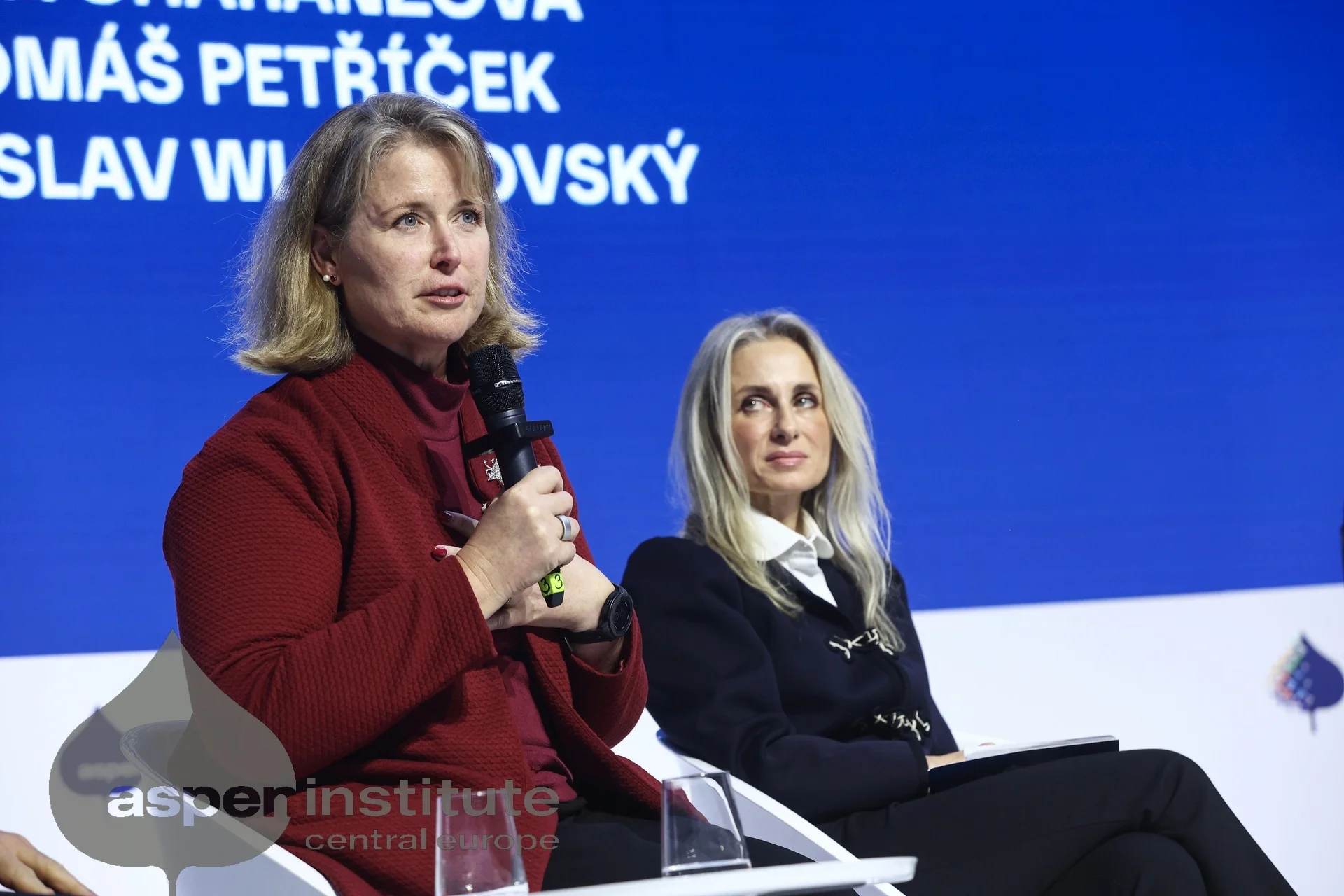
DeAnna Burt
DeAnna Burt is the strategic board member who finds where an organization’s capability is locked and builds the conditions for it to perform at its ceiling. She is the person you call when the room has everything it needs to solve the problem and nobody has figured out how to unlock it yet. At Red Flag, one of the most demanding large force employment exercises in the United States Air Force, she commanded a room of the finest aviators in the world without being able to fly. Her job was not to out-perform them. It was to build the conditions in which they could perform at their ceiling. She did. That is the move she has been running for thirty-three years. She built the operational space infrastructure America depends on, the satellite networks that run GPS and financial transaction timing, the multinational command architecture coordinating allied space operations across 25 nations. She commanded every level. She ran the Space Force’s cyber, nuclear, and operations mission as its Deputy Chief. She did all of this in a domain where the adversary studies your dependencies before you have mapped them, where being wrong is not a bad quarter but an irreversible outcome, and where the question is never “what do I know?” but “what does this team know that we have not yet deployed?” That question is the most valuable thing she brings. Not the record, though the record is there. The specific diagnostic capacity to walk into any organization, find where the capability is locked, and build the conditions for it to perform at its ceiling. In environments where being wrong is not recoverable, that capacity is the difference between the organization that adapts and the one that does not. She now works with boards, C-suites, and senior teams who need someone who has been accountable for that outcome and who can help them find and unlock the capability they already have.

DeAnna Burt is the strategic board member who finds where an organization’s capability is locked and builds the conditions for it to perform at its ceiling. She is the person you call when the room has everything it needs to solve the problem and nobody has figured out how to unlock it yet. At Red Flag, one of the most demanding large force employment exercises in the United States Air Force, she commanded a room of the finest aviators in the world without being able to fly. Her job was not to out-perform them. It was to build the conditions in which they could perform at their ceiling. She did. That is the move she has been running for thirty-three years. She built the operational space infrastructure America depends on, the satellite networks that run GPS and financial transaction timing, the multinational command architecture coordinating allied space operations across 25 nations. She commanded every level. She ran the Space Force’s cyber, nuclear, and operations mission as its Deputy Chief. She did all of this in a domain where the adversary studies your dependencies before you have mapped them, where being wrong is not a bad quarter but an irreversible outcome, and where the question is never “what do I know?” but “what does this team know that we have not yet deployed?” That question is the most valuable thing she brings. Not the record, though the record is there. The specific diagnostic capacity to walk into any organization, find where the capability is locked, and build the conditions for it to perform at its ceiling. In environments where being wrong is not recoverable, that capacity is the difference between the organization that adapts and the one that does not. She now works with boards, C-suites, and senior teams who need someone who has been accountable for that outcome and who can help them find and unlock the capability they already have.