Every reporter covering the conflict in Ukraine has seen the flight path maps. Commercial aviation — the global air traffic that ordinarily flies direct routes across the continent — has rerouted around the battlespace. The detours add hours and fuel costs to thousands of flights. But the rerouting is possible. Commercial aircraft can avoid Ukraine.
Now ask a different question: if a conflict extended into space, where would the rerouting happen?
There is no reroute.
GPS does not have an alternate path. Financial transaction timing — the precision signal that synchronizes markets, clearing houses, and payment networks — does not have a bypass. The satellite infrastructure underlying precision agriculture, supply chain visibility, and autonomous logistics cannot be avoided by choosing a different flight corridor. It is infrastructure. It is everywhere. And everyone who depends on it — which is every organization in this room — is in the engagement zone.
I spent the last five years of my career as the Deputy Chief of Space Operations, responsible for the Space Force’s cyber, nuclear, and operations mission. Before that, I commanded the Combined Force Space Component Command — the operational headquarters responsible for the satellite custody picture that every military user in the world draws on. I was responsible for defending the infrastructure I am describing. I know what the adversary studies. And I know that most of the organizations whose operations depend on that infrastructure have not yet had the conversation they need to have about what it means to be in the engagement zone.
This article is that conversation.
What Your Organization Actually Depends On
The tendency in board-level risk discussions is to treat space as a national security concern — something that happens to governments and militaries, in a domain that does not directly touch the P&L. This framing is no longer accurate, if it ever was.
Let me be specific about what stops working in a contested space environment.
GPS and precision navigation: not just the maps on your phone, but the timestamping that underlies financial transaction clearing, the precision that guides autonomous logistics systems, the signal that orients the precision agriculture technology reducing input costs across the food production system. A degraded GPS environment is not an inconvenience. It is a disruption to the timing infrastructure that modern commerce runs on.
Satellite communications: the bandwidth that carries commercial data across oceans, the relay systems that connect supply chain operations across continents, the communication infrastructure that an increasing proportion of enterprise operations depends on. These are not redundant systems — they are the infrastructure. The terrestrial alternatives are not equivalent in capacity or coverage.
Weather prediction and earth observation: the satellite systems that provide the advance warning that supply chain planning, agricultural operations, and logistics optimization depend on. The precision of modern logistics is built on the precision of modern weather data. That data comes from space.
The organizations in every boardroom that says “we do not have space exposure” are operating on space infrastructure they have not mapped. The exposure is not hypothetical. It is structural. And the adversary who studies your dependencies has already mapped it more thoroughly than you have.
The Adversary Studies Your Dependencies
In the domain I ran, the adversary does not study your strategy documents. They study your dependencies. They look for what you cannot operate without and work backward from there — not to find your weakness, but to find your ceiling. The ceiling of what you can do is determined by what you cannot lose.
Every commercial organization has the same exposure. The adversary who has mapped your GPS dependency, your satellite communication infrastructure, your supply chain constellation layer has mapped your operational vulnerability more precisely than you have. Not because they are smarter. Because that is what adversaries do — they study what you depend on.
Most organizations have not run this analysis on themselves. They have risk registers that cover cybersecurity, regulatory exposure, financial concentration, and key-person dependencies. They have not mapped their satellite infrastructure dependencies with the same rigor. The question is not whether that dependency exists. It does. The question is whether your organization has mapped it — and whether your board has seen the map.
This is where the liberation doctrine and the space-risk argument converge. The capability that is currently locked in most boardrooms is the ability to map this risk correctly. The people who understand the operational picture exist — in your organization, or available to your organization. The question is whether anyone has created the conditions for that expertise to be deployed. Someone has to ask the question: “What does this room know about our space-based dependencies that we have not yet deployed as risk intelligence?” The answer to that question is in the room. It has not been surfaced.
Three Questions for Every Board Risk Committee
You do not need a classified briefing to begin this conversation. You need three questions, asked with the same rigor your risk committee applies to cybersecurity or financial concentration:
The first question: which of our operational capabilities have single-point dependencies on GPS, satellite communication, or space-based data? Map the dependency explicitly. Do not stop at “we use GPS navigation.” Map the dependency downstream: what systems rely on GPS timing, not GPS location? What would happen to our operations if that timing signal degraded by ten seconds? By sixty? The answer to this question is more operationally significant than most boards have been told.
The second question: have we modeled the cascade effects of a 72-hour GPS disruption on our supply chain, our logistics, our financial operations? Not a theoretical degradation — a specific 72-hour outage. What stops? What slows? What alternative do we have, and how long does it take to activate? Most organizations have not run this scenario because it feels unlikely. It felt unlikely until the dependency was mapped. After the mapping, the question changes.
The third question: does our risk committee include anyone with operational experience in the domain we are now dependent on? The person who can answer questions one and two from personal operational experience is a different kind of advisor than the person who has read about it. The difference is not in their knowledge of the facts. It is in their judgment about which facts matter, and when, and what the adversary does with the gaps. That judgment is built in the operational environment. It does not transfer from a policy document.
The Nature of the Engagement Zone
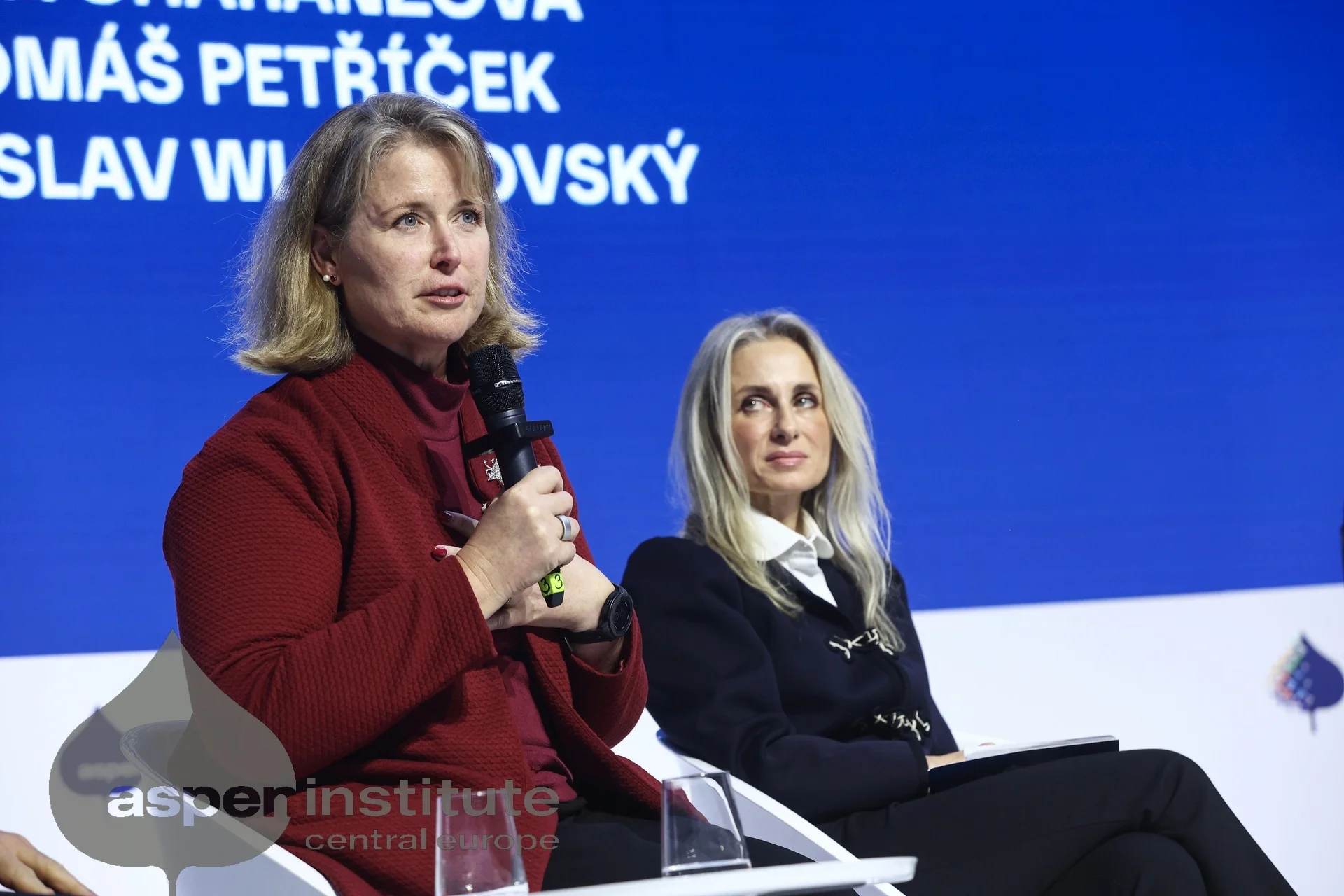
I said this plainly in a media briefing in London in 2023, and I will say it here: everyone is in the engagement zone if a conflict extends into space. That is not a threat assessment. It is a structural description of what happens when the infrastructure that commercial operations depend on exists in the same domain as the military operations that adversaries study.
The point of this article is not to alarm. It is to map. The organizations that understand their dependencies are the ones that can make informed decisions about how to manage the risk — whether through redundancy, through alternative infrastructure, through policy engagement, or through advisory relationships with people who have operated inside the picture they are now dependent on.
The organizations that have not mapped their dependencies cannot make those decisions. They are managing a risk they cannot see, with risk processes calibrated for a world in which the infrastructure was not contested. That world has changed. The question is whether the risk conversation has changed with it.
Your board should know which kind of organization you are. Running those three questions in your next risk committee meeting will give you the answer.
DeAnna Burt
DeAnna Burt is the strategic board member who finds where an organization’s capability is locked and builds the conditions for it to perform at its ceiling. She is the person you call when the room has everything it needs to solve the problem and nobody has figured out how to unlock it yet. At Red Flag, one of the most demanding large force employment exercises in the United States Air Force, she commanded a room of the finest aviators in the world without being able to fly. Her job was not to out-perform them. It was to build the conditions in which they could perform at their ceiling. She did. That is the move she has been running for thirty-three years. She built the operational space infrastructure America depends on, the satellite networks that run GPS and financial transaction timing, the multinational command architecture coordinating allied space operations across 25 nations. She commanded every level. She ran the Space Force’s cyber, nuclear, and operations mission as its Deputy Chief. She did all of this in a domain where the adversary studies your dependencies before you have mapped them, where being wrong is not a bad quarter but an irreversible outcome, and where the question is never “what do I know?” but “what does this team know that we have not yet deployed?” That question is the most valuable thing she brings. Not the record, though the record is there. The specific diagnostic capacity to walk into any organization, find where the capability is locked, and build the conditions for it to perform at its ceiling. In environments where being wrong is not recoverable, that capacity is the difference between the organization that adapts and the one that does not. She now works with boards, C-suites, and senior teams who need someone who has been accountable for that outcome and who can help them find and unlock the capability they already have.

DeAnna Burt is the strategic board member who finds where an organization’s capability is locked and builds the conditions for it to perform at its ceiling. She is the person you call when the room has everything it needs to solve the problem and nobody has figured out how to unlock it yet. At Red Flag, one of the most demanding large force employment exercises in the United States Air Force, she commanded a room of the finest aviators in the world without being able to fly. Her job was not to out-perform them. It was to build the conditions in which they could perform at their ceiling. She did. That is the move she has been running for thirty-three years. She built the operational space infrastructure America depends on, the satellite networks that run GPS and financial transaction timing, the multinational command architecture coordinating allied space operations across 25 nations. She commanded every level. She ran the Space Force’s cyber, nuclear, and operations mission as its Deputy Chief. She did all of this in a domain where the adversary studies your dependencies before you have mapped them, where being wrong is not a bad quarter but an irreversible outcome, and where the question is never “what do I know?” but “what does this team know that we have not yet deployed?” That question is the most valuable thing she brings. Not the record, though the record is there. The specific diagnostic capacity to walk into any organization, find where the capability is locked, and build the conditions for it to perform at its ceiling. In environments where being wrong is not recoverable, that capacity is the difference between the organization that adapts and the one that does not. She now works with boards, C-suites, and senior teams who need someone who has been accountable for that outcome and who can help them find and unlock the capability they already have.