Before I tell you what I know about leadership, let me tell you what I did not know how to do.
I cannot fly a fighter jet. I never could. Yet I was the first non-pilot space commander to lead the Blue “friendly” Air Expeditionary Wing forces during Red Flag 16-3 — the most demanding combat exercise the United States Air Force runs. The room I walked into contained some of the finest aviators in the world. They knew what I was. Several of them were testing it.
I did not try to out-fly them.
I could not. And trying would have been the wrong answer in any case — not because it would have failed, but because it would have been the wrong question. The question I was actually there to answer was not “how do I establish that I belong in this room?” It was “how do I unlock what the most capable people in this room can do?”
That question is the one I have been asking for thirty-three years. It is the most important question in leadership. And it is almost never the one the leadership development market teaches people to ask.
The Market Is Solving the Wrong Problem
The leadership development industry has constructed an elaborate infrastructure for producing leaders who have all the answers. Executive education programs. Frameworks. Certifications. Coaching engagements. Case study curricula. All of it designed to make the individual leader more capable, more knowledgeable, more certain.
The investment is enormous — by some estimates approaching four hundred billion dollars annually. The results are not proportionate to that investment. Organizations continue to fail at exactly the moments that require the most from their leadership. Not because the programs are poorly run. Because they are solving the wrong problem.
The environments that demand the most from leaders — where the stakes are real, the adversary is adaptive, and the cost of being wrong is not a bad quarter but an irreversible outcome — do not reward the leader who has all the answers. They reward the leader who builds the organization that produces better answers than any one person could have had alone.
These are different skills. They require different selection criteria. And the market has been systematically selecting for the wrong one.
The Doctrine
The leaders who build the most durable organizations are never the most capable person in the room. They are the ones who find, trust, and unlock the capability already there.
This is not a philosophy. It is not a style. It is an operational doctrine — a repeatable move that produces a specific and measurable outcome. I have been running it for thirty-three years, in organizations where failure was not recoverable, at every level of command. It works not because it is clever but because it is accurate: no single leader has ever been the answer to a problem of genuine organizational complexity. The answer is always distributed across the people who are already in the room.
The doctrine has one central question, asked before any other: “What does this room know that we have not yet deployed?”
Not “what do I know?” Not “what should I tell them?” Not “what does the strategy say?” What does the room already know that we are not yet using? The answer to that question, in virtually every organization I have been in, is more than anyone has admitted. The capability is present. It is locked. The leader’s job is to unlock it.
What Happened at Red Flag
Let me return to the room with the pilots, because what happened there is the proof of concept.
Red Flag is built to simulate the first ten combat missions of a war — the most dangerous, the most uncertain, the highest attrition. The pilots who come through it are among the most trained, most capable, most competitive professionals in any domain. They do not respond to authority for its own sake. They respond to competence.
I could not give them competence in the cockpit. What I could give them was something they needed and did not always receive: the conditions to perform at their actual ceiling.
I walked the flight line. Not to inspect — to understand. Who was there, what they needed, what was getting in their way. The exercise does not happen without the maintainers preparing the aircraft in extreme heat before dawn. It does not happen without the planners who build the scenarios. It does not happen without the controllers who manage the airspace. I made sure the people responsible for those functions knew that I knew it — and that they had what they needed to do their jobs.
Then I told the pilots: “You are the best in the world. Act like it.”
That is not motivation. That is an instruction. It names the ceiling and assigns the responsibility for reaching it. My job was not to fly with them. My job was to build the conditions in which they could fly at their best — and to make sure every person whose work made that possible understood that their work was seen.
The exercise succeeded. Not because I was the most capable person in that operation. Because I asked the right question: what does this room know that we have not yet deployed? And then I built the conditions for the room to deploy it.
The Three Moves
The doctrine is not complicated. It requires three things, executed consistently:
The first move is asking the Liberation Question before any other question. In any meeting, at any level, before the agenda starts, before the strategy is stated, before the directive is issued: “What does this room know that we have not yet deployed?” This question does several things simultaneously. It signals that the leader does not assume they have the full picture. It creates space for the people who have been holding something back. And it frequently surfaces the answer to the problem the meeting was called to solve — because the person who knew the answer was in the room all along.
The second move is the accountability architecture. Credit belongs to the team. Accountability belongs to you. This is not a leadership style — it is an operating principle that must be held consistently to be credible. The signal is in the pronouns: “we” for achievement, “I” for accountability. When a leader says “I” to claim credit and “we” to distribute blame, the architecture has inverted. Everyone in the room notices. The doctrine fails. When a leader says “we built this” and “I was responsible for what went wrong,” the architecture holds — and the people in the room learn that it is safe to deploy what they know, because the leader will not take credit for it and will absorb the accountability if it fails.
The third move is making the locked capability visible. Before you can unlock what the room knows, you have to name that something is being held. This requires a specific kind of attention — not to the agenda, but to the people. Who has been quiet? Who started a sentence and stopped? Who agreed in the meeting and then came to find you afterward? The locked capability almost always announces itself, if the leader is paying attention to the right signals. Naming it — “I noticed you started to say something earlier; what were you going to say?” — is the move that releases it.
What Is Lost Without It
Organizations that concentrate capability at the top become dependent on the top. When the top changes — and it always changes — the capability leaves. The succession problem that most organizations treat as an HR challenge is actually a doctrine problem: they have built organizations that unlock capability upward instead of distributing it throughout.
The organizations that run the doctrine build something different. Each person who performs at their ceiling under a leader who knows how to unlock them becomes a leader who knows how to unlock the people around them. The capability compounds. Each generation develops the next. The organization that results is not dependent on any single leader’s ceiling — it is built to exceed it.
I have seen both kinds of organization. The difference is not in the talent they recruit. It is in the question their leaders ask. The ones that compound ask: “What does this room know that we have not yet deployed?” The ones that plateau ask: “What do I know that I should be telling them?”
The environments most organizations are now navigating are not forgiving of the second question. The problem is moving faster than any one person can track. The adversary — whether a market competitor, a technology shift, or a geopolitical disruption — is studying your dependencies and your gaps, not your strategy documents. The leader who assumes they have the full picture is the one whose organization will be surprised by what it did not know it did not know.
The Question to Ask Before the Next Meeting Ends
The doctrine starts with one question. It does not require a program, a framework, or a certification. It requires a leader willing to ask it — and willing to accept that the answer will come from the room, not from themselves.
Before your next meeting ends, ask it: “What does this room know that we have not yet deployed?”
Then stop talking.
The answer is already there. Your job is to unlock it.
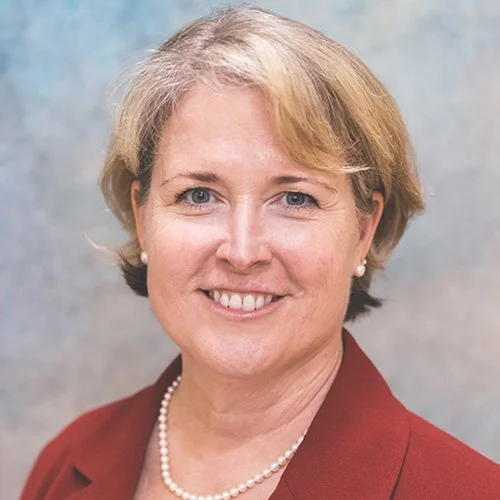
DeAnna Burt
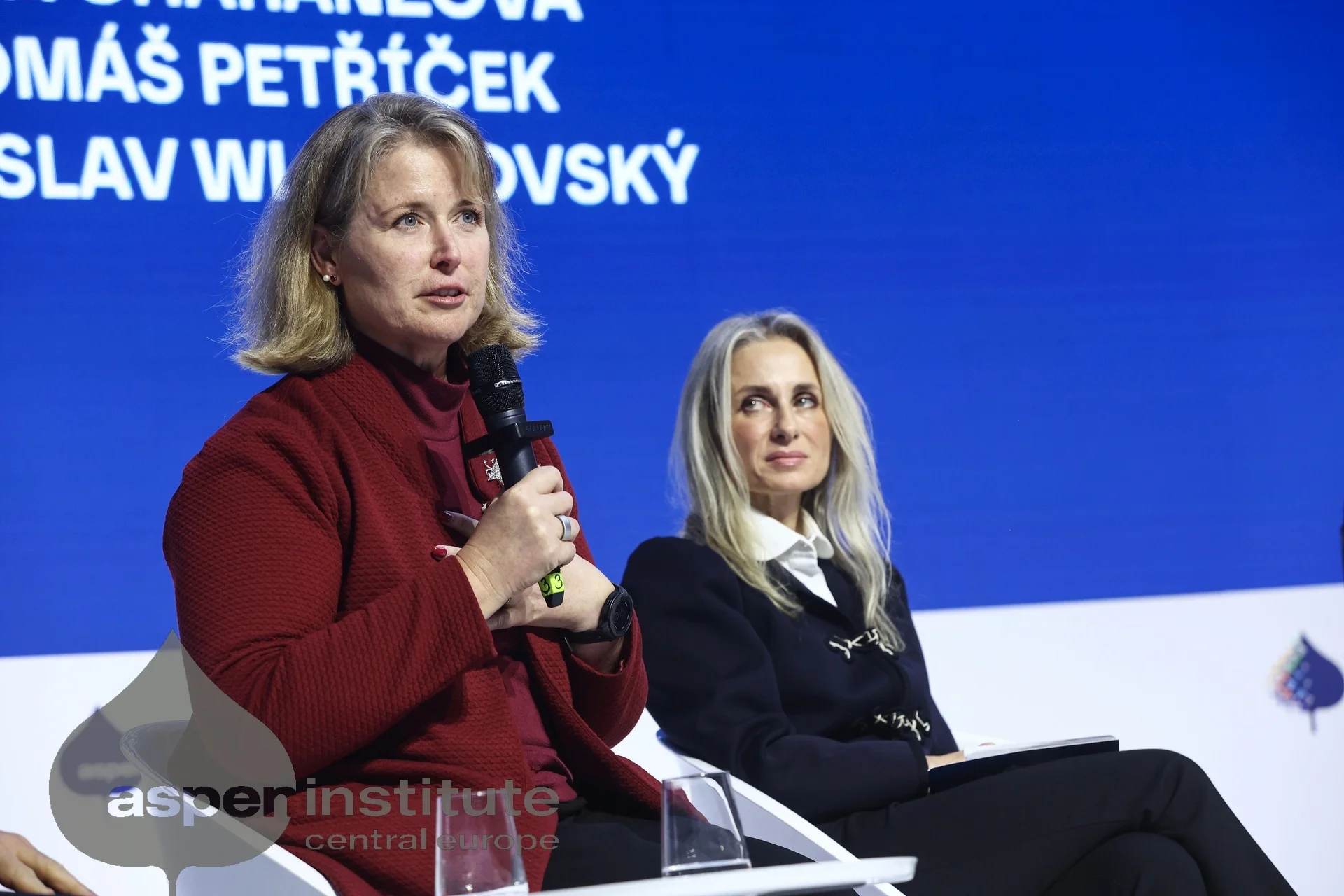
DeAnna Burt is the strategic board member who finds where an organization’s capability is locked and builds the conditions for it to perform at its ceiling. She is the person you call when the room has everything it needs to solve the problem and nobody has figured out how to unlock it yet. At Red Flag, one of the most demanding large force employment exercises in the United States Air Force, she commanded a room of the finest aviators in the world without being able to fly. Her job was not to out-perform them. It was to build the conditions in which they could perform at their ceiling. She did. That is the move she has been running for thirty-three years. She built the operational space infrastructure America depends on, the satellite networks that run GPS and financial transaction timing, the multinational command architecture coordinating allied space operations across 25 nations. She commanded every level. She ran the Space Force’s cyber, nuclear, and operations mission as its Deputy Chief. She did all of this in a domain where the adversary studies your dependencies before you have mapped them, where being wrong is not a bad quarter but an irreversible outcome, and where the question is never “what do I know?” but “what does this team know that we have not yet deployed?” That question is the most valuable thing she brings. Not the record, though the record is there. The specific diagnostic capacity to walk into any organization, find where the capability is locked, and build the conditions for it to perform at its ceiling. In environments where being wrong is not recoverable, that capacity is the difference between the organization that adapts and the one that does not. She now works with boards, C-suites, and senior teams who need someone who has been accountable for that outcome and who can help them find and unlock the capability they already have.
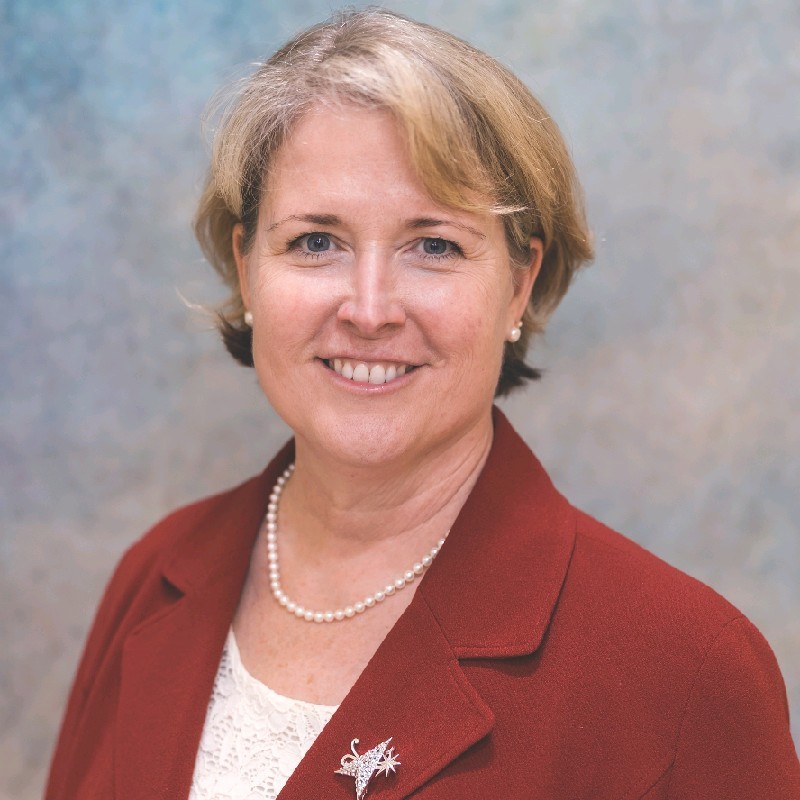
DeAnna Burt is the strategic board member who finds where an organization’s capability is locked and builds the conditions for it to perform at its ceiling. She is the person you call when the room has everything it needs to solve the problem and nobody has figured out how to unlock it yet. At Red Flag, one of the most demanding large force employment exercises in the United States Air Force, she commanded a room of the finest aviators in the world without being able to fly. Her job was not to out-perform them. It was to build the conditions in which they could perform at their ceiling. She did. That is the move she has been running for thirty-three years. She built the operational space infrastructure America depends on, the satellite networks that run GPS and financial transaction timing, the multinational command architecture coordinating allied space operations across 25 nations. She commanded every level. She ran the Space Force’s cyber, nuclear, and operations mission as its Deputy Chief. She did all of this in a domain where the adversary studies your dependencies before you have mapped them, where being wrong is not a bad quarter but an irreversible outcome, and where the question is never “what do I know?” but “what does this team know that we have not yet deployed?” That question is the most valuable thing she brings. Not the record, though the record is there. The specific diagnostic capacity to walk into any organization, find where the capability is locked, and build the conditions for it to perform at its ceiling. In environments where being wrong is not recoverable, that capacity is the difference between the organization that adapts and the one that does not. She now works with boards, C-suites, and senior teams who need someone who has been accountable for that outcome and who can help them find and unlock the capability they already have.